
Turkey vs China Manufacturing: Which is Better for Your Next Sourcing Project in 2026?
Sourcing Service Guide
Turkey vs China Manufacturing: Which Is Better for Your Next Sourcing Project in 2026?
For SMEs and mid-market buyers planning new projects, the Turkey vs China manufacturing question is no longer theoretical. Rising freight costs, geopolitical risk, and shifting consumer expectations are forcing procurement leaders to rethink where they place their next orders.
In this article, we compare Turkey and China side by side across total landed cost, lead times, quality control, communication, and logistics risk—so you can choose the right production base for your 2026 sourcing strategy.
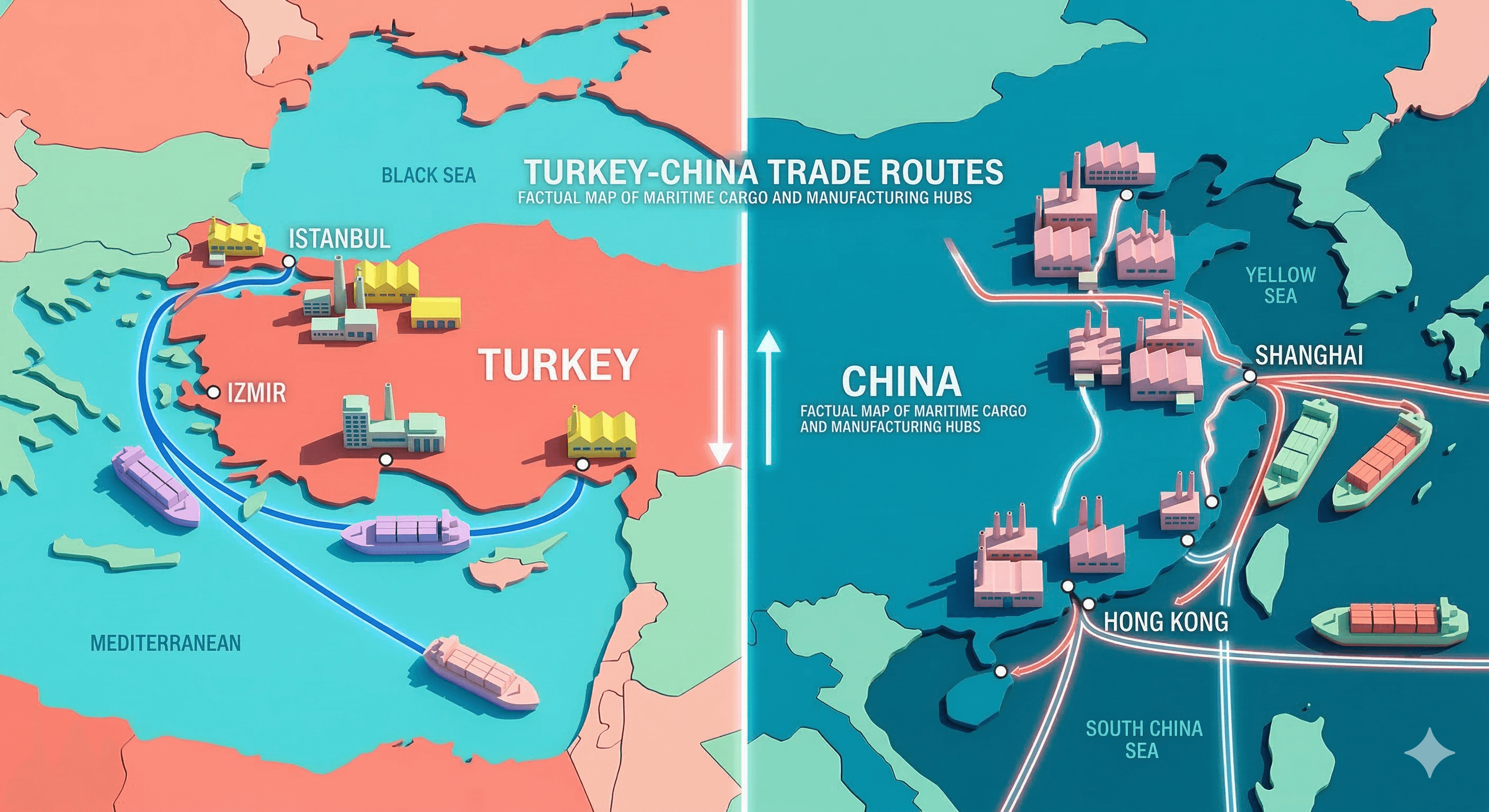
1. Total Landed Cost: Not Just Unit Price
Many buyers still default to China because of its reputation for low unit prices. But by 2026, the real question is total landed cost, not ex‑factory price.
Typical cost components
For a mid-sized order (e.g., €150,000–€300,000) of consumer or light industrial goods, your landed cost usually includes:
- Ex-factory unit price
- Tooling and sampling
- Inland transport to port or airport
- Export documentation and customs fees
- International freight (sea, rail, air, or road)
- Insurance
- Import duties and VAT
How China compares
- Unit price: Often 5–20% lower than Turkey for highly commoditized, labor-intensive products (e.g., basic textiles, plastic items, simple electronics housings).
- Freight: Asia–Europe sea freight has normalized since the pandemic but remains volatile. A 40' HQ container China–Northern Europe has ranged between $2,000–$6,000 in the last 24 months, with surcharges during disruptions.
- Duties: Many product categories from China face standard MFN tariffs into the EU/UK/US, and some are exposed to additional anti-dumping or safeguard measures.
How Turkey compares
- Unit price: Often 5–15% higher than China on pure labor cost items, but competitive or lower on products where materials and energy dominate (e.g., metal fabrication, home textiles, furniture, automotive components).
- Freight: Road and short-sea options to Europe can be significantly cheaper and more predictable. A full truckload Turkey–Germany, for example, can often move in the €2,000–€3,000 range with 5–7 day transit.
- Duties: Turkey has a Customs Union with the EU for most industrial products, meaning 0% customs duty for qualifying goods. This can offset a higher ex-factory price.
Practical takeaway
- For EU/UK buyers, Turkey often wins on landed cost for mid- to higher-value products once you factor in duty savings and lower logistics costs.
- For US buyers, China can still be cheaper on pure cost for many categories, but Turkey becomes attractive for nearshoring, diversification, and risk reduction.
2. Lead Times and Flexibility
Speed to market and flexibility are now strategic advantages, especially for fashion, home, and seasonal products.
China lead times
- Production lead time: 45–90 days is common for standard consumer goods once materials are in stock.
- Transit time to Europe: 30–40 days by sea port-to-port, plus 7–10 days for port handling and inland trucking.
- Total concept-to-delivery: 90–150 days is typical for SMEs, especially when sampling and approvals are included.
Turkey lead times
- Production lead time: 30–60 days for many categories, with faster turns possible for repeat orders.
- Transit time to Europe: 5–10 days by road or short sea to major EU hubs; 2–4 days by express road for urgent shipments.
- Total concept-to-delivery: 60–90 days is realistic for well-managed projects.
Why this matters
Shorter lead times allow you to:
- Place smaller, more frequent orders instead of large seasonal bets.
- React to sell-through data and replenish winners.
- Reduce inventory and working capital tied up in stock.
For fast-moving categories (fashion, home décor, promotional items), Turkey’s proximity can materially improve your cash flow and reduce markdown risk.
3. Quality Control and Manufacturing Capabilities
Both Turkey and China have world-class factories—and both have weak ones. The difference is in industry specialization and how easy it is to manage quality.
Strengths of China
- Scale and depth: Massive supplier base across almost every category.
- Electronics & complex assemblies: Still the global leader for consumer electronics, components, and integrated products.
- Mature QC ecosystem: Many third-party inspection firms, labs, and testing houses.
Typical challenges:
- Wide quality spread between factories; strong due diligence is essential.
- Some suppliers still prioritize price over long-term quality unless expectations are very clearly set and monitored.
Strengths of Turkey
- Textiles & apparel: Strong in fashion, technical textiles, denim, knitwear, and home textiles with EU-compliant standards.
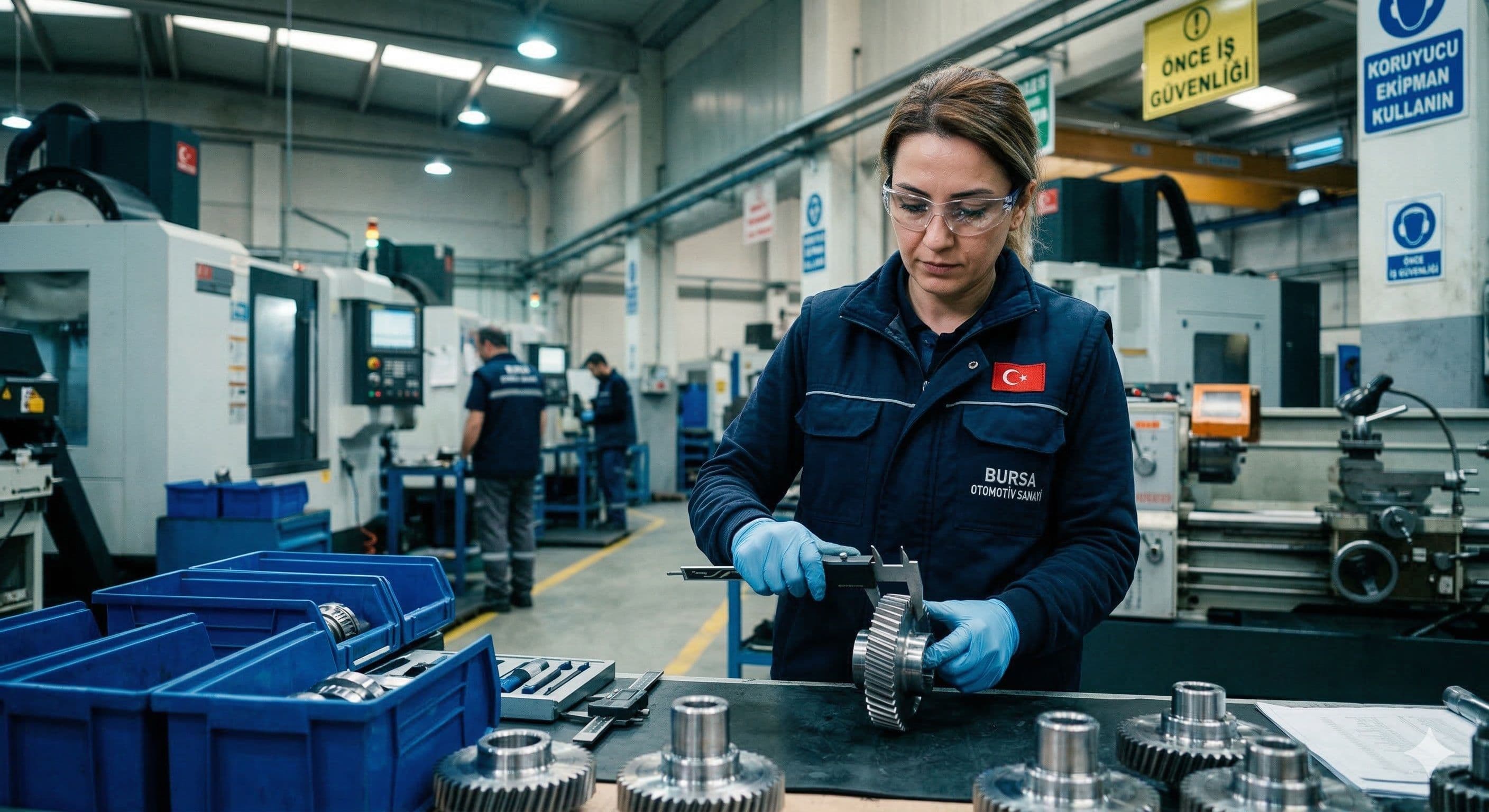
- Automotive & metalwork: Established Tier 1 and Tier 2 suppliers to European OEMs; good capabilities in machining, metal fabrication, and components.
- Furniture & home: Competitive in upholstery, wood furniture, and mattresses.
Typical advantages:
- Many factories already work with European brands and standards (REACH, OEKO-TEX, ISO, IATF, etc.).
- Easier to conduct on-site audits and in-line inspections due to proximity and shorter travel.
Managing quality in practice
Regardless of country, SMEs and mid-market buyers should:
- Conduct factory audits before onboarding.
- Use clear specifications, QC checklists, and AQL standards.
- Plan pre-production, in-line, and pre-shipment inspections.
A sourcing consultancy with teams on the ground in Turkey can help bridge the gap between Western expectations and local factory practices, especially in the first 2–3 production runs.
4. Communication, Culture, and IP Considerations
Smooth communication can make or break a sourcing project—especially for SMEs without large in-house teams.
Communication with Chinese suppliers
- Language: Many export sales teams speak good English, but misalignment can still occur on technical details.
- Time zone: 6–8 hours ahead of Europe, 12–15 hours ahead of North America—slows down iteration.
- Culture: Relationship-building (guanxi) and indirect communication styles can lead to misunderstandings if not managed carefully.
Communication with Turkish suppliers
- Language: Export managers often speak strong English and are used to working with European buyers.
- Time zone: 1–2 hours ahead of Central Europe, making same-day communication and video calls easy.
- Culture: Business culture is a blend of European and Middle Eastern influences; many factories are used to Western documentation and compliance expectations.
IP and product development
- China: IP protection has improved, but risks remain, especially in highly competitive categories. Strong contracts, NDAs, and careful supplier selection are essential.
- Turkey: Generally perceived as lower risk for copycat products in many B2B categories, though contracts and NDAs are still important.
For SMEs developing proprietary designs or private-label collections, Turkey can offer a more collaborative, iterative development process with less friction.
5. Logistics Risk and Geopolitical Factors
The last few years have shown how fragile global supply chains can be. When comparing Turkey vs China manufacturing, logistics risk is now a board-level concern.
Key risks with China
- Long, complex routes: Heavy reliance on Asia–Europe or Trans-Pacific sea lanes.
- Port congestion & disruptions: Strikes, weather, and geopolitical tensions can add weeks to transit.
- Tariff and trade policy risk: Ongoing US–China tensions and potential EU measures can affect duties and compliance requirements.
Key risks with Turkey
- Regional instability: Proximity to the Middle East and Black Sea can create perceived risk, though main export corridors to Europe have remained relatively stable.
- Currency volatility: The Turkish lira has been volatile, which can be a risk or an opportunity depending on contract structure.
- Regulatory alignment: For EU-focused buyers, Turkey’s Customs Union and alignment with many EU standards is a significant stabilizing factor.
Supply chain resilience
Many mid-market buyers are now adopting a China+1 or China+Nearshore strategy:
- Keep some volume in China for cost-sensitive SKUs.
- Shift higher-margin, time-sensitive, or strategic SKUs to Turkey.
- Build dual-sourcing options to reduce single-country dependency.
6. When Turkey Wins, When China Wins – And How to Decide
There is no one-size-fits-all answer to the Turkey vs China manufacturing debate. The right choice depends on your product, market, and risk appetite.
Turkey is often the better choice when:
- Your main markets are EU or UK, and duty savings plus short lead times matter.
- You sell fashion, home, furniture, automotive components, or metalwork where Turkey has strong capabilities.
- You need shorter lead times, more frequent replenishment, and lower inventory risk.
- You value easier communication, on-site visits, and closer cultural alignment.
China is often the better choice when:
- You produce electronics, complex assemblies, or highly commoditized items where China’s ecosystem is unmatched.
- Your primary market is North America, and you can manage longer lead times.
- You prioritize lowest possible unit cost and can absorb logistics volatility.
A structured way to decide
For each key product family, score Turkey and China on:
- Landed cost (including duties and freight)
- Lead time and flexibility
- Quality and technical capability
- Communication and development support
- Logistics and geopolitical risk
Weight each factor based on your strategy (e.g., cost 30%, lead time 25%, risk 20%, quality 15%, communication 10%) and calculate a simple scorecard. This turns a subjective debate into a data-driven sourcing decision.
Conclusion: Building a 2026-Ready Sourcing Strategy
In 2026, the Turkey vs China manufacturing question is less about choosing one country forever and more about designing a resilient, cost-effective mix that fits your product portfolio.
Turkey offers:
- Competitive total landed cost into Europe
- Shorter lead times and greater flexibility
- Strong capabilities in textiles, furniture, automotive, and metalwork
- Easier communication and closer cultural fit for Western buyers
China remains a powerhouse for:
- Electronics and complex assemblies
- Ultra-competitive pricing on commoditized goods
- Massive supplier depth across almost every category
The most successful SMEs and mid-market buyers are now combining both: using China where it truly excels, and leveraging Turkey as a strategic nearshore base to reduce risk, shorten lead times, and improve service levels.
If you’d like an objective assessment of where your next project should sit, our team can run a Turkey vs China sourcing feasibility analysis on your current or upcoming SKUs—covering cost, lead times, and risk—so you can move forward with confidence.